
Search Engine Optimization, or SEO, is the process of improving a website so it appears more visible in search engine results when people search for relevant information, products, or services. In simple terms, SEO helps your content get found by the right audience at the right time. For businesses, bloggers, and content creators, SEO is one of the most powerful ways to attract organic traffic and build long-term online growth.
Introduction to SEO
Every day, Google and other search engines process billions of searches. People use search engines for answers, to compare products, to learn new skills, and to find trusted businesses. Even valuable content may remain invisible if your website isn’t search-optimized. SEO fixes this by making it easier for search engines to understand your pages and show them to people searching for related topics.
SEO is not just about keywords. It’s about content quality, page structure, website speed, mobile friendliness, backlinks, technical setup, and user experience. Taken together, these factors make a website more readable for users and for search engines. This is the reason why SEO has become one of the core elements of digital marketing.

What Is SEO?
SEO means search engine optimization. It is a group of strategies and practices to improve the visibility of a website in organic search results. Those are the free listings you get when you do a search engine. Organic search results are naturally occurring based on relevance and quality.
The main goal of SEO is to improve a website’s ranking in search engine result pages for targeted search queries. For instance, if someone looks for “best digital marketing tips” or “how to start a blog,” a properly optimized page will tend to rank higher in the search results. More visibility often means more clicks, more traffic, and more chances for conversions.
SEO works because search engines use algorithms to determine which pages are most relevant to a search query. These algorithms look at lots of signals: relevance of content, authority of page, user experience, freshness, technical performance, etc. SEO helps to improve these signals so your content can rank better.
Types of SEO
The three primary categories of SEO are as follows:
How Search Engines Work
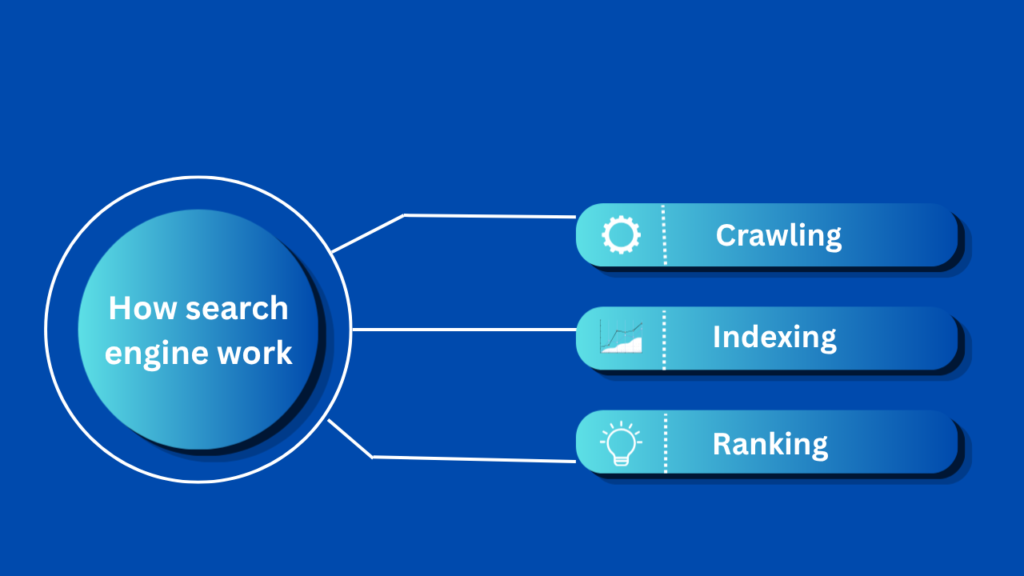
It is helpful to understand how search engines work in order to properly comprehend SEO. Crawling, indexing, and ranking are the three fundamental steps that search engines typically take.
- Crawling means search engines send bots to discover new and updated pages across the web. These bots move from link to link and collect information about pages.
2. Indexing means the search engine stores and organizes the discovered content in its database. If a page is not indexed, it cannot appear in search results.
3. Ranking means the search engine decides which pages should appear first for a particular search query. This is where SEO matters the most, because search engines compare many pages and choose the most useful ones.
If your website is easy to crawl, properly indexed, and filled with useful content, it has a much better chance of ranking well. That is why SEO combines technical work and content strategy.
Why is it so important?
SEO is important because it helps websites gain visibility without relying only on paid advertising. Ads can produce quick traffic, but the traffic stops when the budget stops. SEO, on the other hand, can deliver long-term traffic once your pages begin ranking.
Trust is one of the main reasons SEO is important. Because they perceive organic results as more authoritative and relevant than advertisements, many users have greater faith in them. Users are more likely to believe a website that shows up on the first page of search results.
SEO is also important because search traffic is extremely targeted. When someone searches for a specific keyword, they typically have a need or intent. This means that SEO can attract visitors who are more likely to read, sign up, contact you, or purchase from you.
For businesses, SEO supports growth in brand awareness, lead generation, and sales. For content creators and bloggers, it helps articles get discovered and shared. For local businesses, SEO can drive nearby customers to visit a store, call a business, or request services.
wKFmasJOUPfjBRDsbhqyZx
Great content! Keep up the good work!